Notes from August 2025
Every note I posted in August 2025

Deep Breaths critically examines Holotropic Breathwork, the work of the Grofs, transpersonal psychology and psychedelic therapy.
Note: This post contains references to sexual violence, the recovery of repressed memories, and cult-like dynamics in therapeutic settings. It also includes images of participants being physically restrained during Holotropic Breathwork sessions, as well as discussion of abuses in the MAPS Phase II MDMA trial.
If you are concerned about a therapist or cult-like dynamics, you can find more resources on therapy harm here and on spirituality and healing cults here.
30.08.2025 -
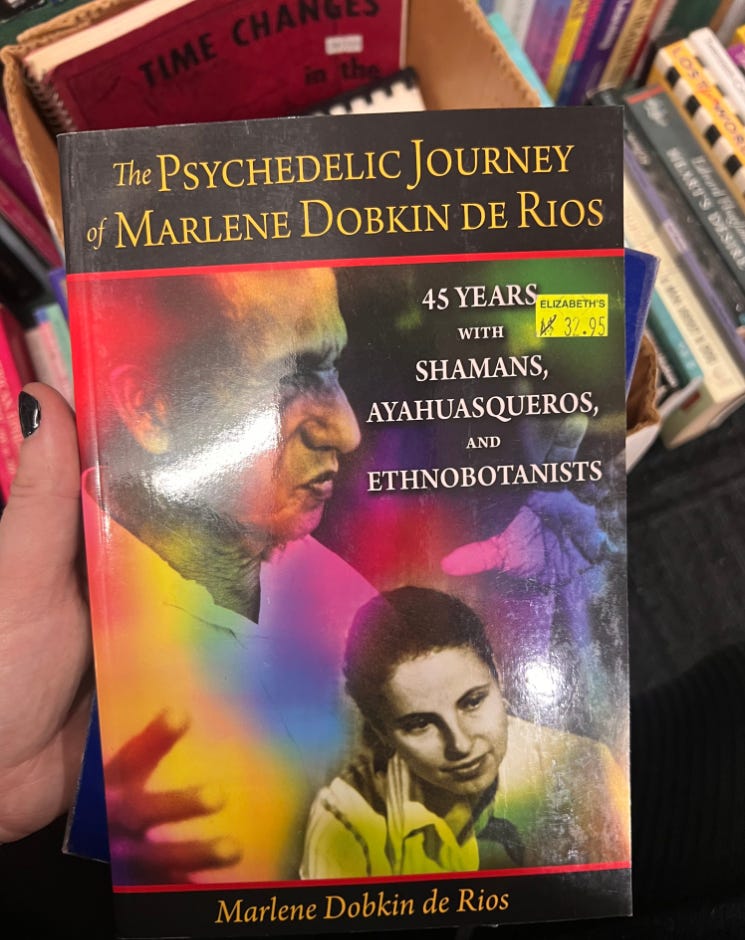
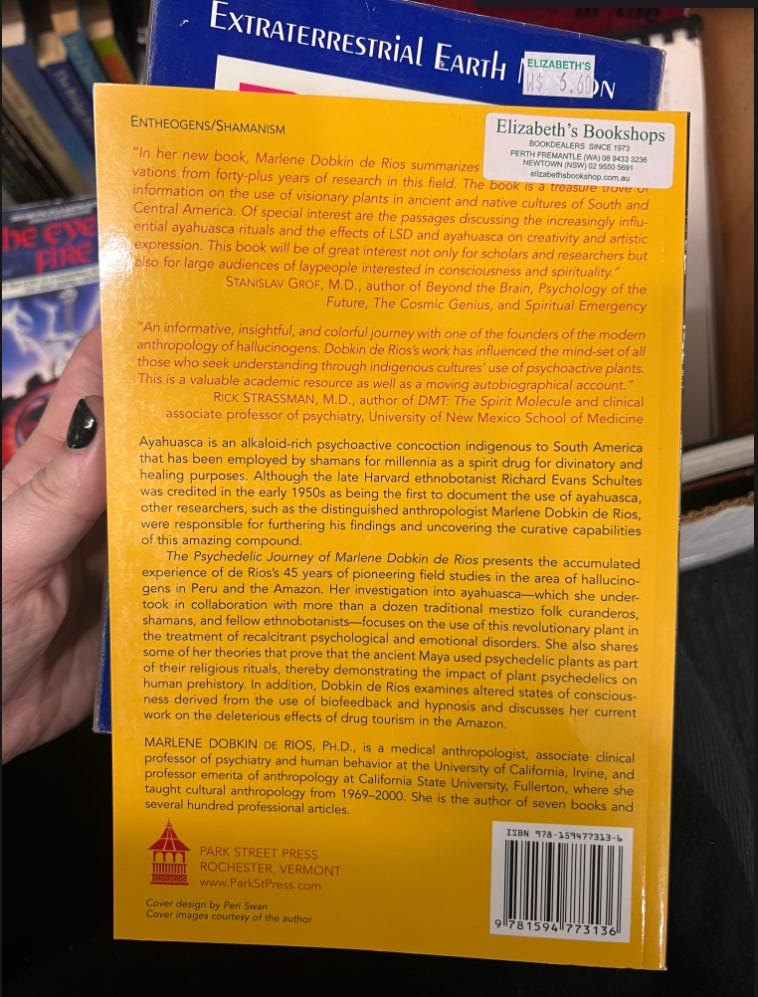
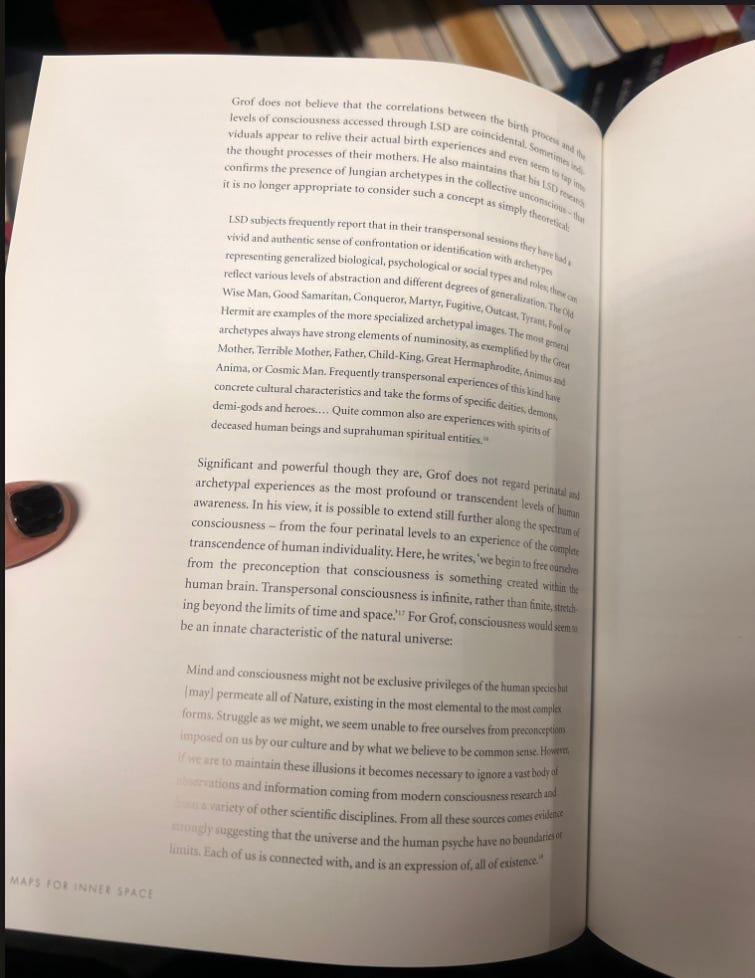
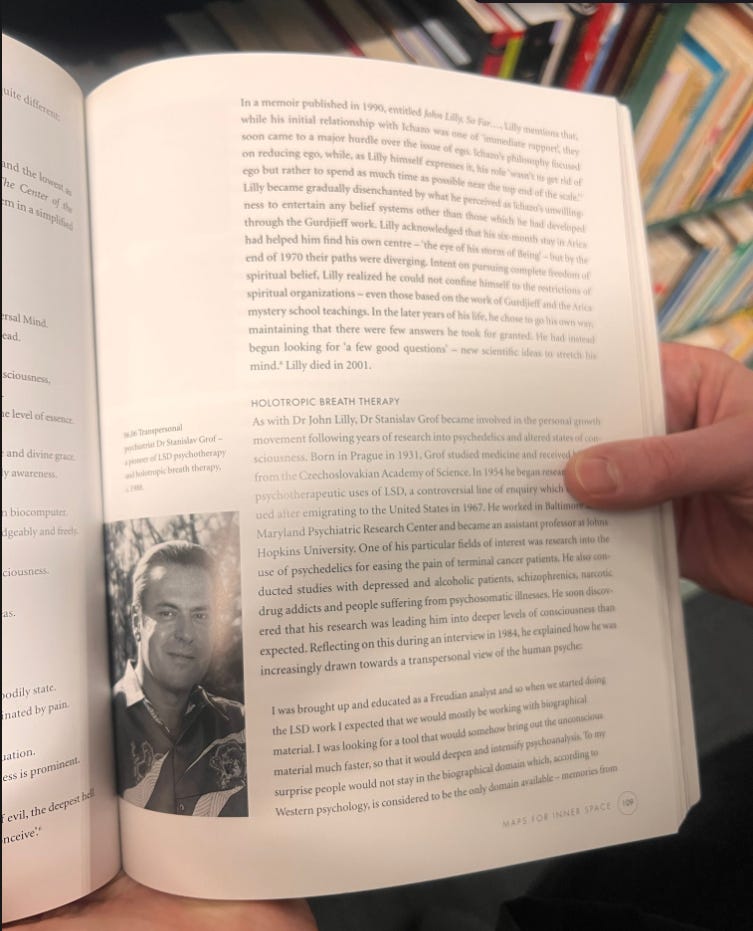
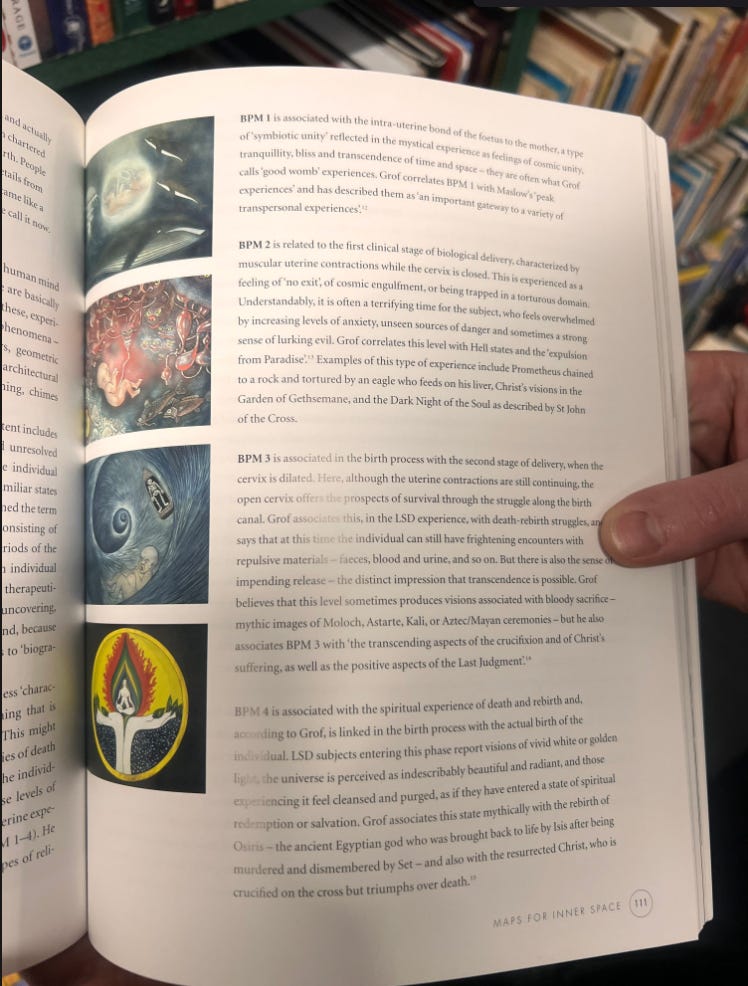
Spotted in the “Occult and Paranormal” section of Elizabeth’s Secondhand Bookstore in Newtown, Sydney: a blurb from Grof on the back of “The Psychedelic Journey of Marlene Dobkin de Rios” and a few pages on Grof in an encyclopedia-type book on the New Age.

29.08.2025 -
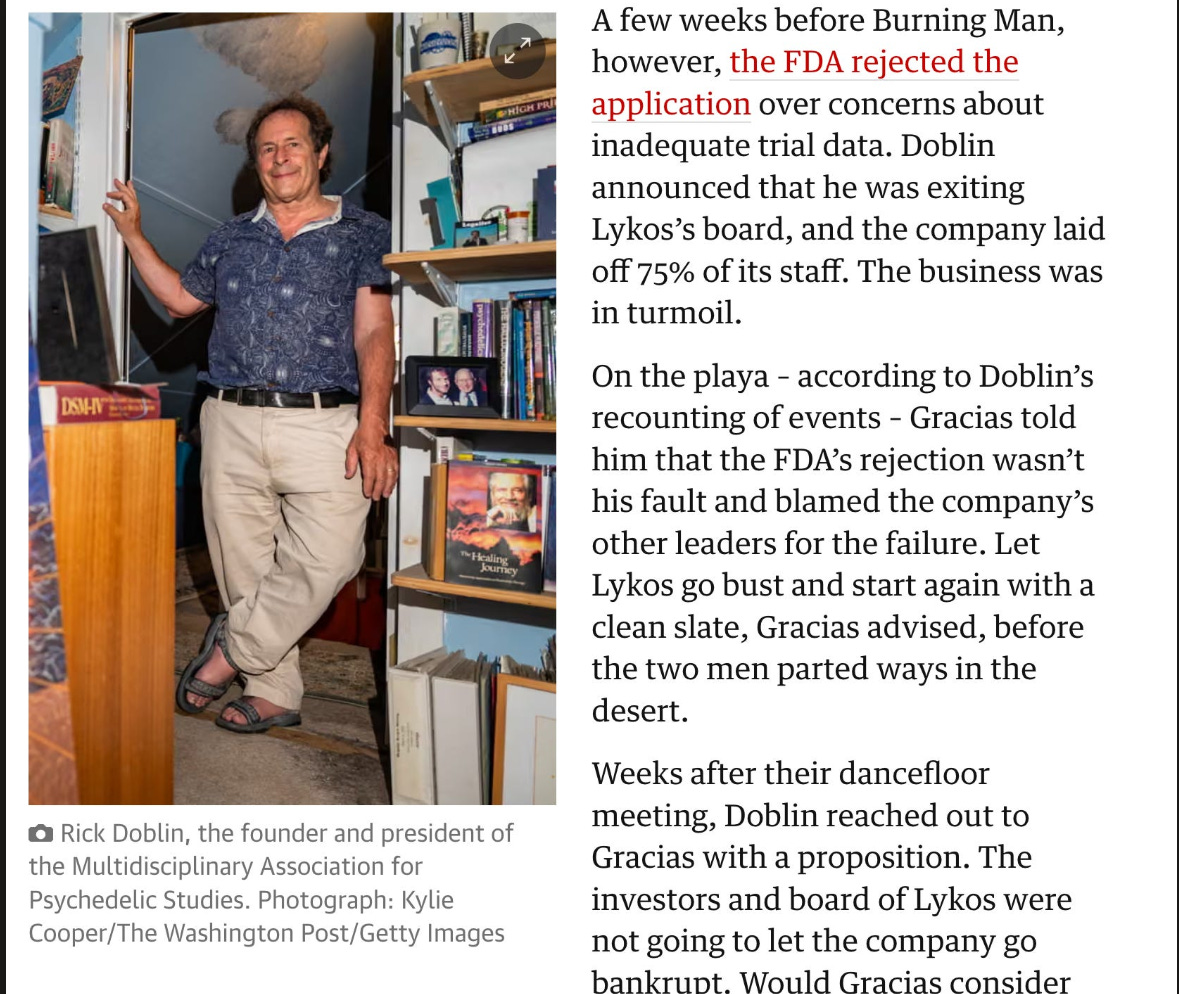
There’s a lot to take on board in this new Guardian article about Doblin and the billionaire bros club.
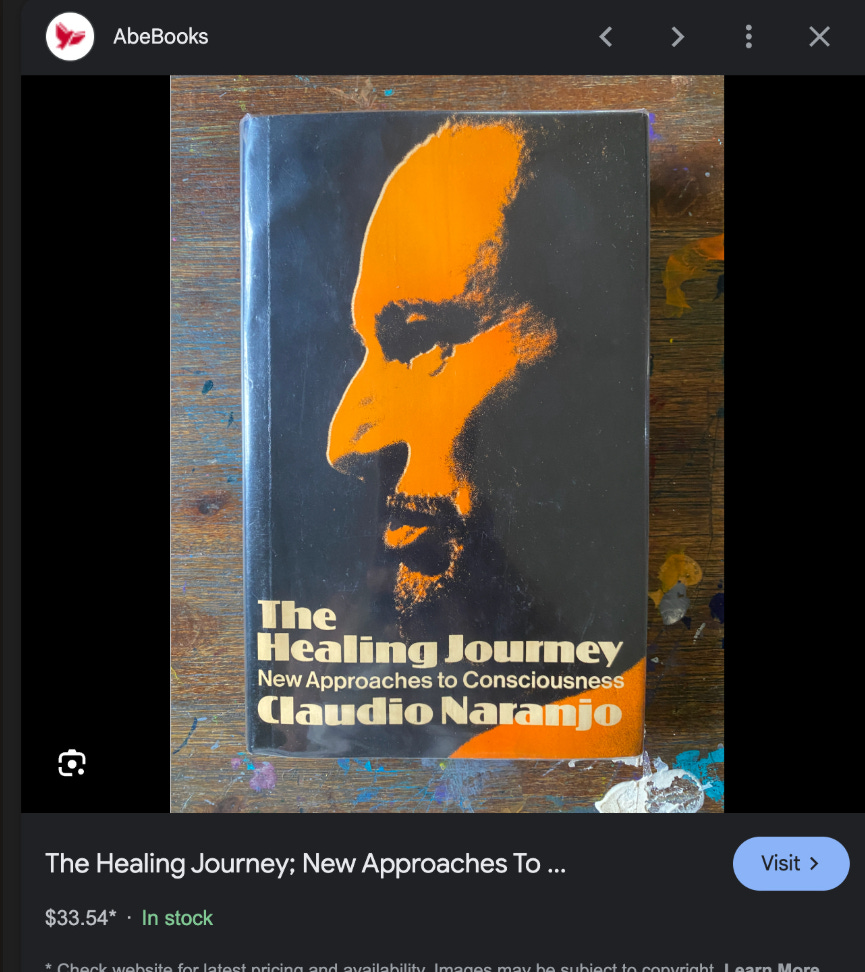
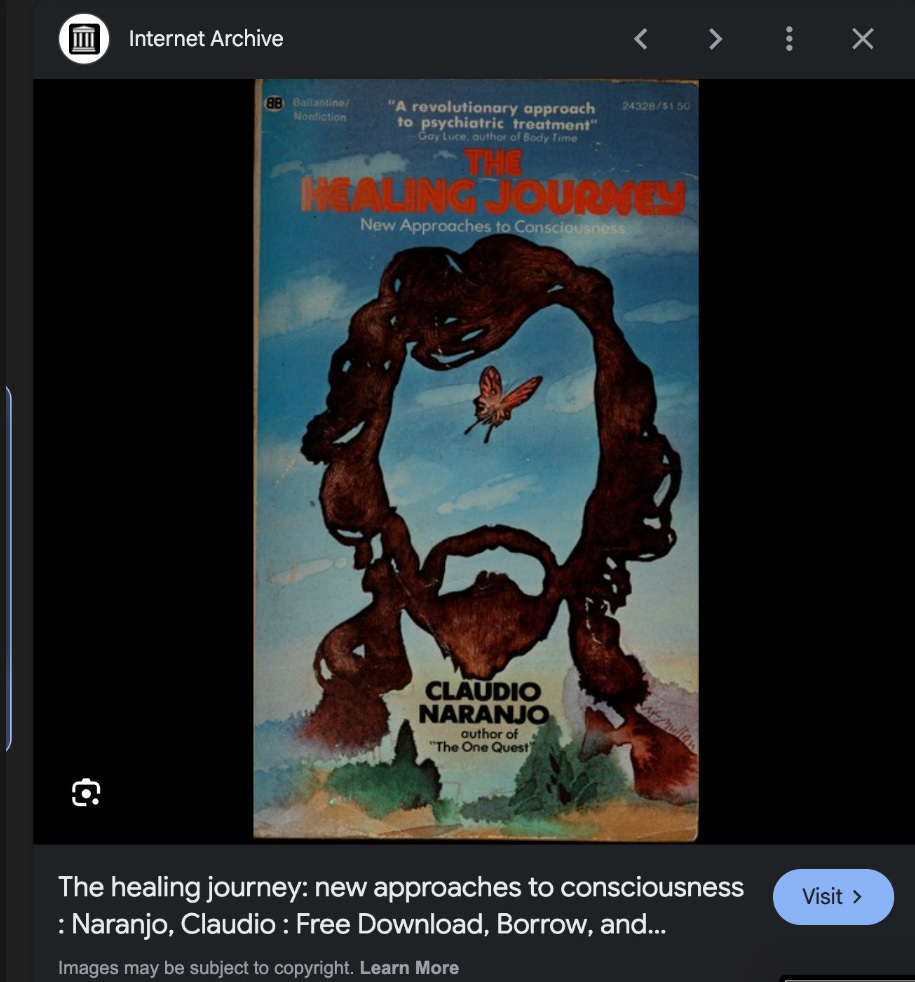
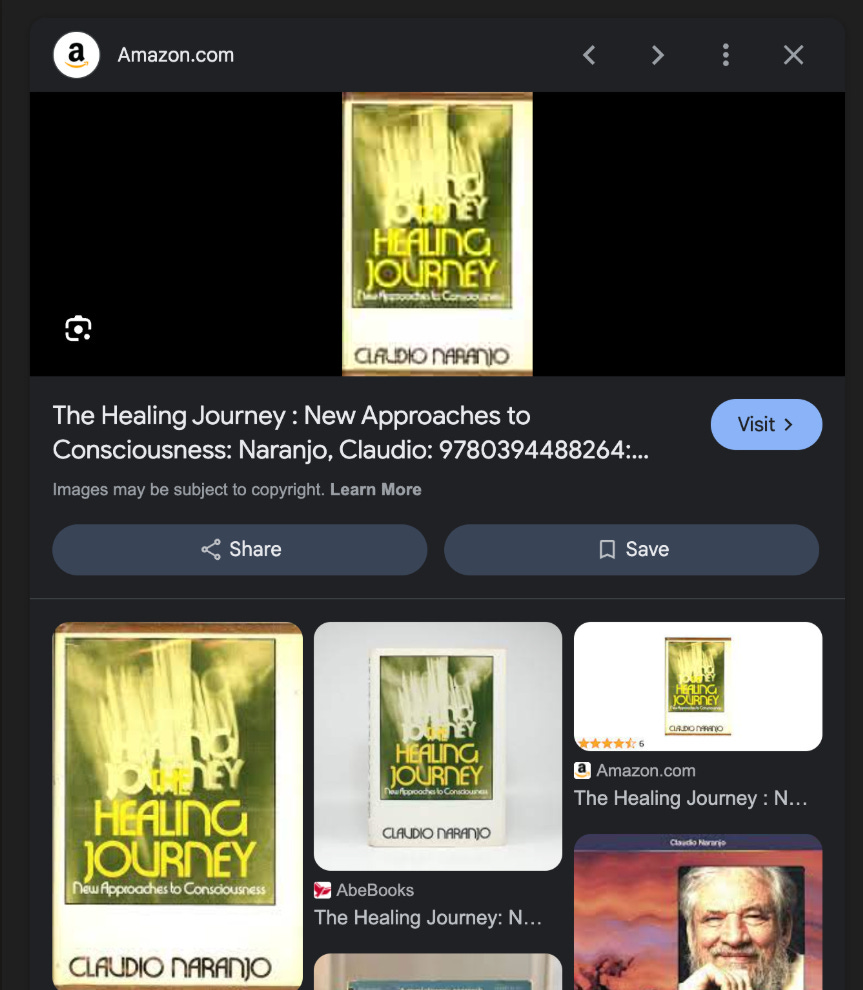
The portrait of Doblin is interesting again. Like the New York Times portrait, he is in his home office, amongst his clutter. On one side, the DSM-IV is propping up a frame or monitor. On the other side, a bookshelf with a photo of young Doblin and Leo Zeff — an immediate attention grabber for me as I’ve been deep diving on the Secret Chief on the work of underground MDMA therapist Leo Zeff. This was the first book MAPS ever published. I also noticed the book a few shelves below, with its cover on display. The book is TheHealing Journey by Claudio Naranjo. This book has had several covers, all of them quite striking — except for the version MAPS published that is displayed on Doblin’s shelf. Really unfortunate.
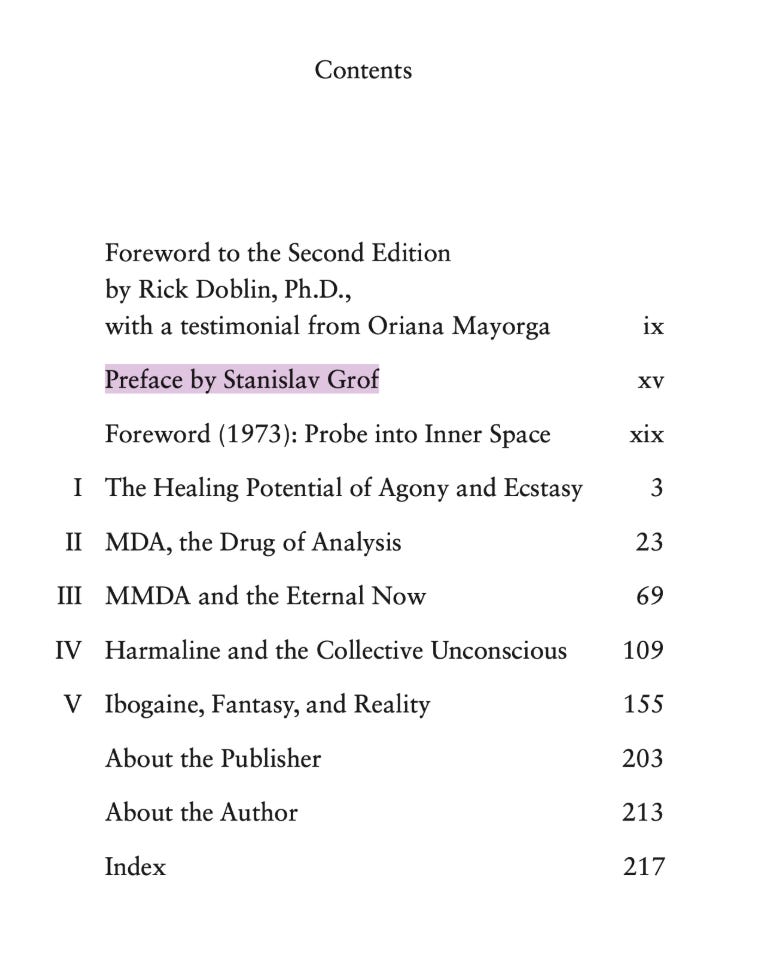
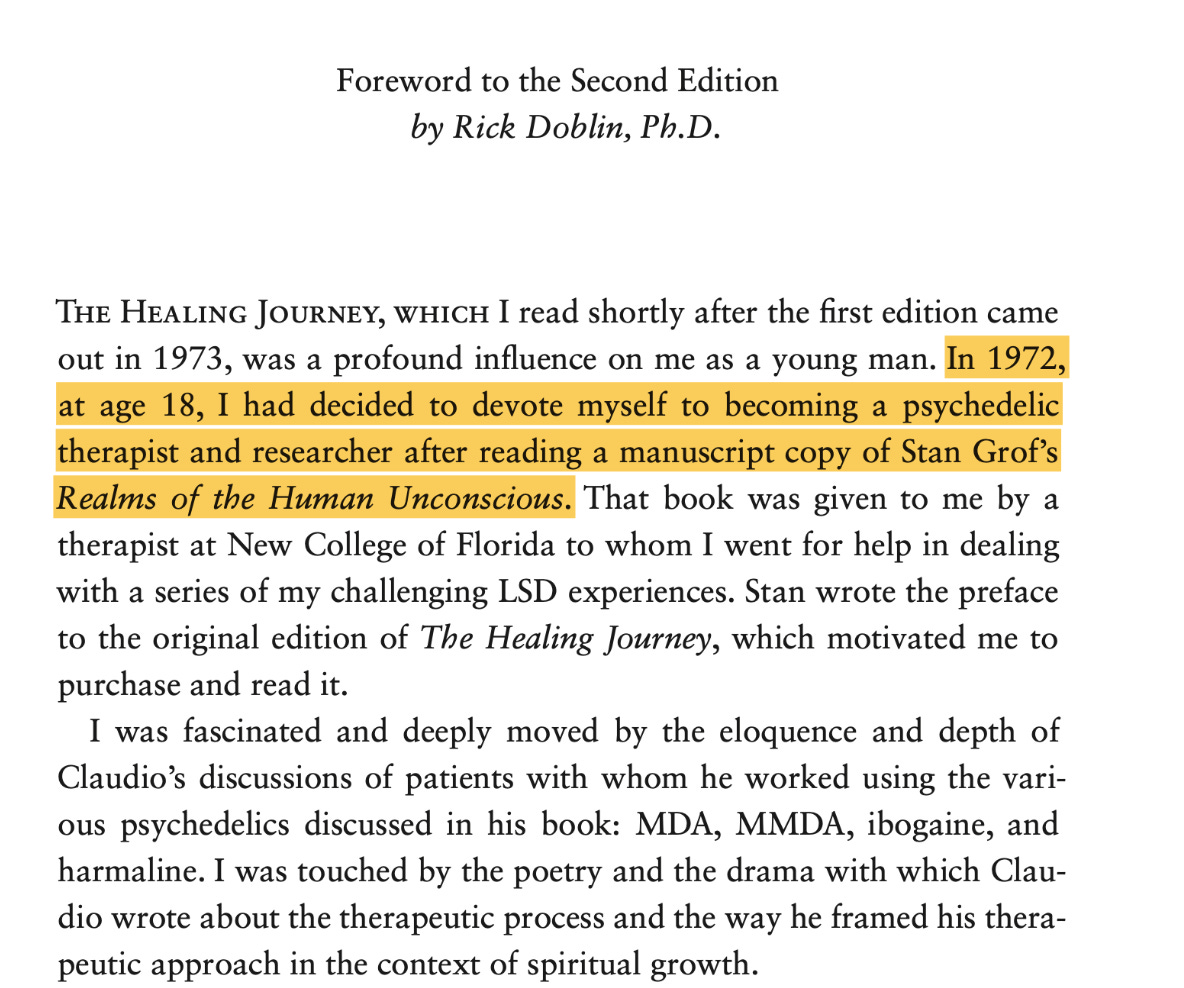
The second edition of the book, published by MAPS, features a foreword by Rick Doblin anda preface by Stanislav Grof. Doblin also starts the book with a mention of Grof being his conduit to Naranjo:
“The Healing Journey, which I read shortly after the first edition came
out in 1973, was a profound influence on me as a young man. In 1972,
at age 18, I had decided to devote myself to becoming a psychedelic
therapist and researcher after reading a manuscript copy of Stan Grof’s Realms of the Human Unconscious. That book was given to me by a therapist at New College of Florida to whom I went for help in dealing
with a series of my challenging LSD experiences. Stan wrote the preface
to the original edition of The Healing Journey, which motivated me to
purchase and read it.”
So many connections…
29.08.2025 -
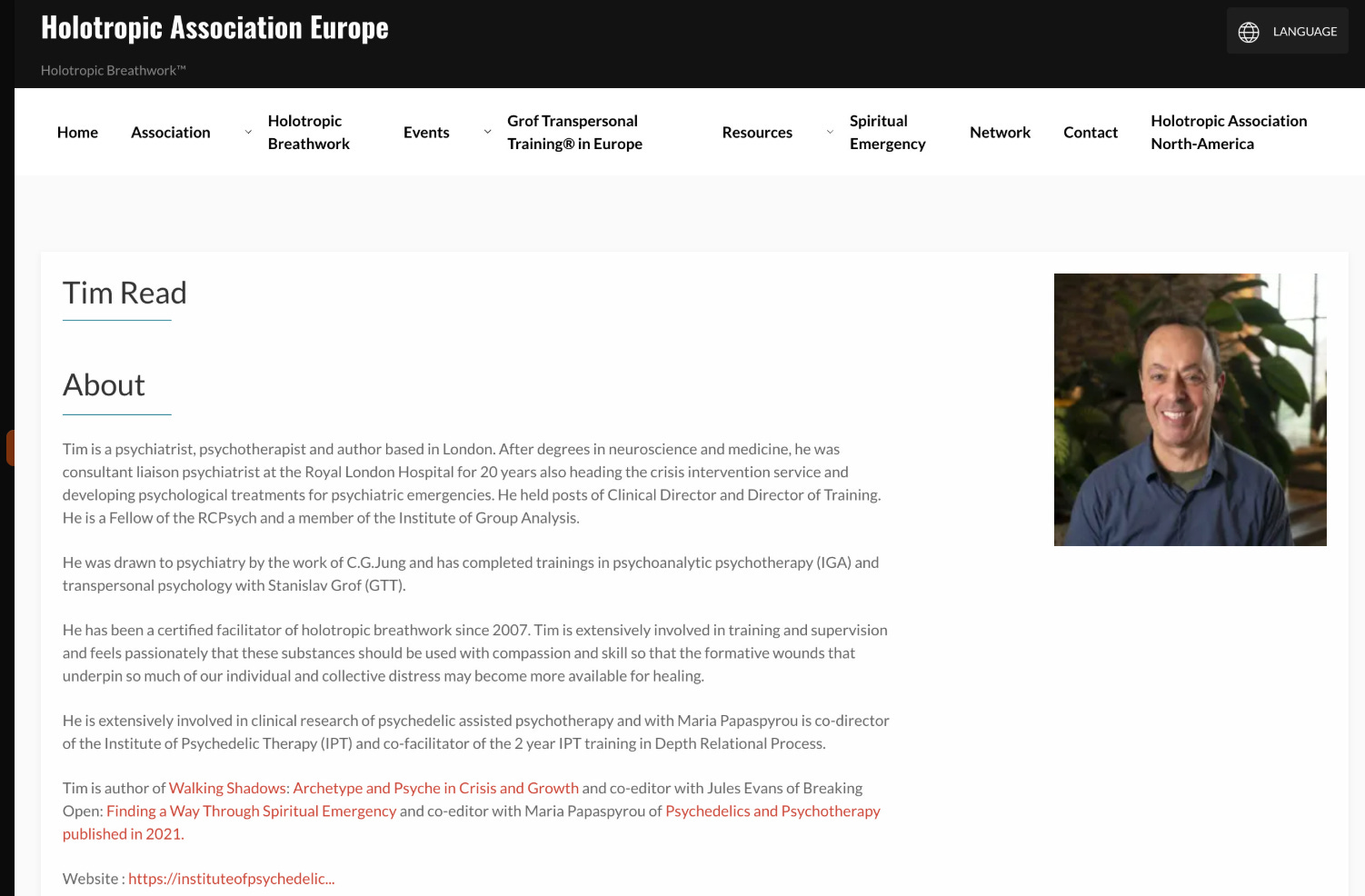
There is a very big difference between generic ‘brethwork’ and Holotropic Breathwork. That is why I consider it quite misleading/deceptive for Tim Read (GPM II) to be described as a ‘breathwork’ facilitator for this training program in Australia, where this therapy is regulated. Tim Read has been a certified Holotropic Breathwork facilitator since 2007. He is highly involved in promoting and practicing Grofian theory. Another lead facilitator for this program, Dr Nikola Ognyenovits, describes himself elsewhere: “I was introduced to non-ordinary states of consciousness through Holotropic Breathwork. I completed six modules with Grof Transpersonal Training. I had the privilege of learning from Stanislav Grof and Tav Sparks. I co-facilitated breathwork sessions in Queensland.” The training organisation makes no mention anywhere of the heavy involvement of two of their lead facilitators in an obscure, highly controversial and totalising pseudoscientific practice.

27.08.2025 -
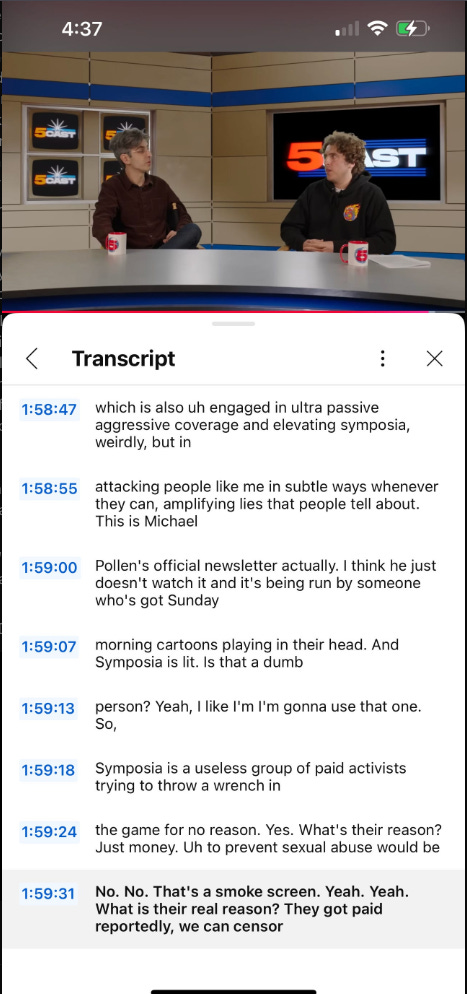
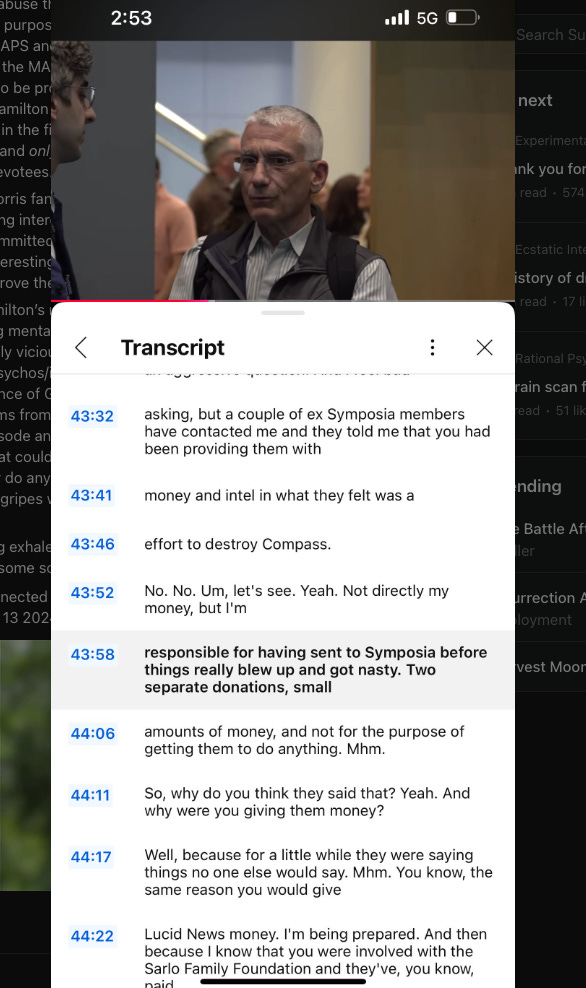
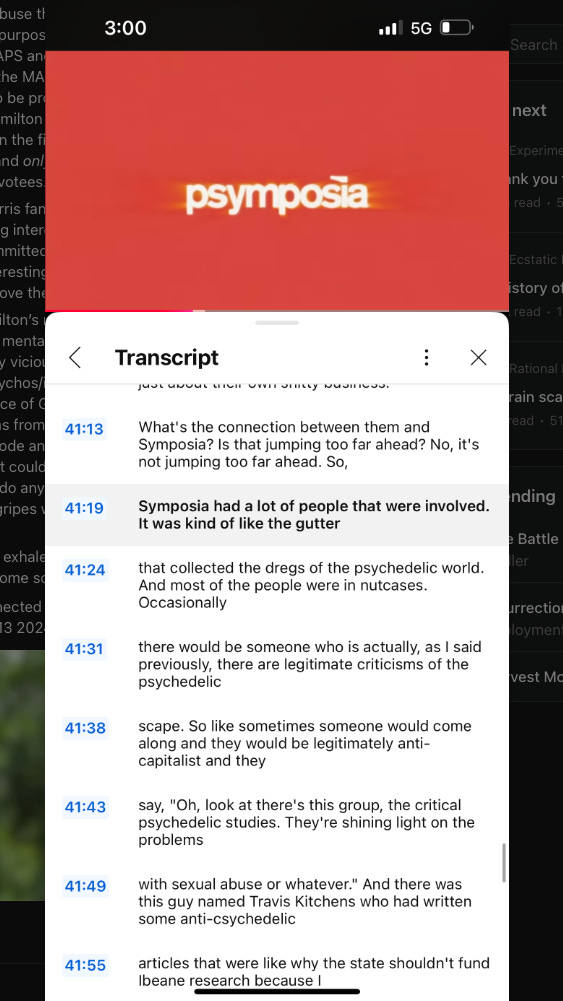
Yesterday I was able to watch a 2 hour interview on “Channel 5” with Hamilton Morris. The link was private yet had about 2,000 views and a bunch of fluffy positive comments — shortly after I finished watching, it was removed. Hamilton spends a good chunk of the 2 hours in a viscous and poorly informed rant about Psymposia and lamestream journalists who are dumb enough to go to Ivy League J-school. The famous documentary filmmaker, the son of a famous documentary filmmaker, is too smart to be fooled by the need for formal education or qualifications….can you believe he thinks the extensively well-supported argument that wealth inequality is a large driver of mental health issues “[doesn’t] hold water in my opinion, dangerously insane”.
The podcast cuts away to footage of Hamilton confronting Bob Jesse about his donations to Psymposia (seemingly personal, small donations years ago), Hamilton tells Bob Jesse that Psymposia and/or the Sarlo Foundation/Susie Sarlo are suing him for defamation. Bob Jesse tells Hamilton that truth is a defence for defamation, to which Hamilton admits that truth is not on his side because he claimed the Sarlo Foundation gave Psymposia money when it was actually Susie Sarlo as an individual.
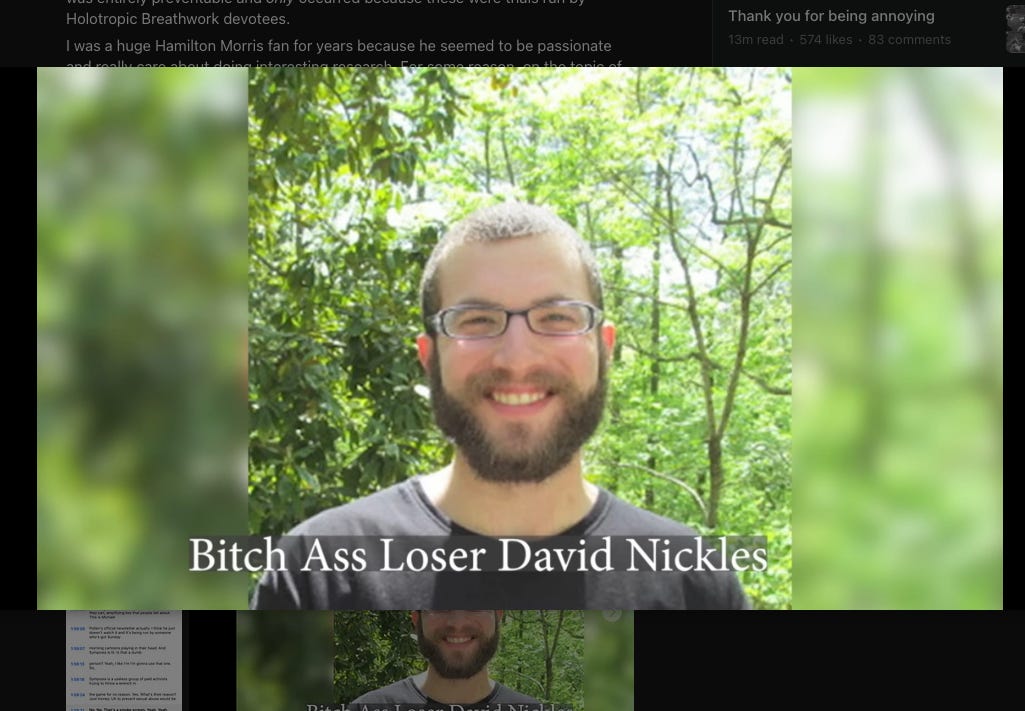
The entire episode and Hamilton’s obsession with Psymposia is like listening to a 2010s hipster high-school bully tirade against the “psychos”, “nutcases”, “bitch ass loser” (actual quote he gleefully put up as caption to a picture of Dave Nickles) he hates because they’re dumb. For someone with so much rage interest in the topic, Hamilton seems to work hardest at maintaining his staunch pro-MAPS views by avoiding engaging with any substance beyond Reddit. Everything he says is riddled with errors and deeply ignorant takes that just repack Doblin’s talking points. Hamilton seems incapable of seeing Rick as anything other than a good guy who did the right thing to prevent abuse, when there are already overwhelming amounts of evidence public that this could not be further from the truth.
Hamilton says rejection of MAPS Holotropic Breathwork-based protocol “prevented the creation of frameworks that would have real accountability and a protocol to prevent the very type of abuse that they claimed to be so dangerous”. I strongly, strongly disagree. A core purpose of my writing here on substack is to highlight the pseudoscience behind MAPS and their FDA application. How these trials were run and the ideology guiding the MAPS mission are several documentary levels of science scandal waiting to be properly dissected, held back by the ignorant defiance of people like Hamilton (and all of GPM III). There are decades worth of research and experience in the field of preventing abuses — what happened here was entirely preventable and only occurred because these were trials run by Holotropic Breathwork devotees.
I was a huge Hamilton Morris fan for years because he seemed to be passionate and really care about doing interesting research. For some reason, on the topic of MAPS, he’s so deeply committed to his views that he refuses to look at what is, in my view, an incredibly interesting but highly problematic story of how New Age Grofian pseudoscience drove the entire mission and operations of MAPS.
I have no idea where Hamilton’s moral compass lands. He simultaneously advocates destigmatising mental health and being careful about language/attacks, while launching appallingly vicious personal attacks that focus on de-legitimising people by calling them psychos/insane, he wants safer frameworks but doesn’t want to look at the influence of Grof, he doesn’t believe in cancel culture, but has dregged up obscure claims from an ex-partner of a member of psymposia who is clearly in a psychotic episode and used that to joke about them in a cartoon charade of violence? What could possibly make that a reasonable thing for Hamilton Morris to say or do any of this — genuinely, wtf? Hamilton has also pre-emptively dismissed any gripes with him being misogynistic as essentially woke-police non-sense.
I already recorded a “long exhale” on this and may include it in this week’s audio notes. For now, here are some screenshots of the now-deleted video.
[I am not affiliated or connected with Psymposia in any form. I worked with them briefly from Oct 31 - Dec 13 2024].

27.08.2025 -
Good round up of « materialist Newtonian-Cartesian » neurosci from August.
27.08.2025.b -
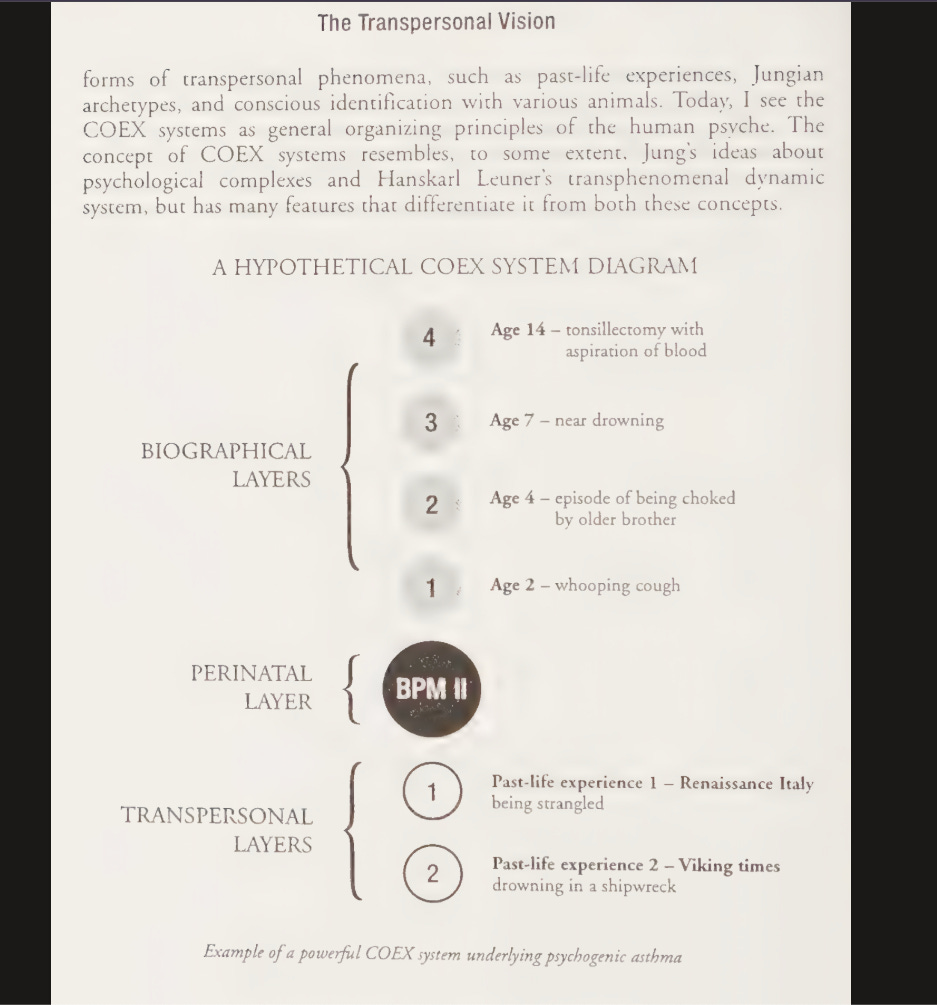
From Stan Grof’s 1998 book The Transpersonal Vision, (published by “Sounds True, Inc.”) this diagram gives a good overview of his theory behind the systems of condensed experience (COEX systems). The COEX system in the example diagram connects biographical experiences of suffocation with the perinatal and transperal layers of past-life experiences, including being strangled in Renaissance Italy and drowning in a shipwreck in Viking times. For Grof, these layers all work in dynamic interplay. It’s this theory of the COEX system that forms the basis of his belief that some victims of sexual assault need to heal the perinatal and/or transpersonal layers to stop the repetition of sexual assault the COEX system in their current life—victim-blaming dressed in New Age pseudoscience.
“Further new information about the biographical/recollective level of the psyche that emerged from my research was the discovery that emotionally relevant memories are stored in the unconscious, not as a mosaic of isolated imprints, but in the form of complex dynamic constellations. I coined for them the name “COEX systems,” which is short for “systems of condensed experience.” A COEX system consists of emotionally charged memories from different periods of life that resemble each other in the quality of emotion or physical sensation that they share. Each COEX has a basic theme that permeates all its layers and represents their common denominator…”
27.08.2025 -
My Sunday evening ‘Quick Breather’ series is now up on Apple Podcasts and Spotify. This week, I talk about Synergistic Press, Buckminster Fuller, Myron Stolaroff, the Sequoia Seminars, Drawing it Out by Sherana Frances, Meduna’s mixture, Rachel Yehuda, Bessel van der Kolk, Gaza, and Ben Sessa…
18.08.2025 -
Yesterday I saw a post on the r/PsychedelicTherapy reddit that was about Grof, something like « a song in honour of Stan Grof ». When I clicked on it though, it was gone. Did anyone else see this and/or happen to get a screenshot?
15.08.2025 -
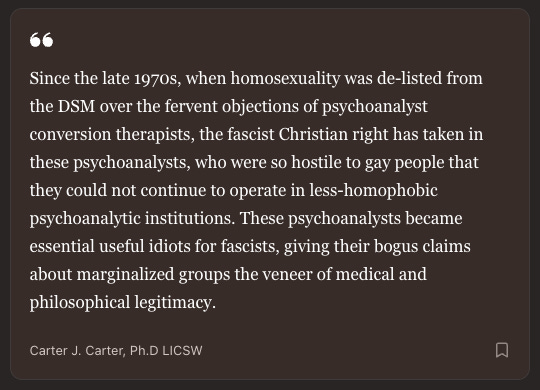
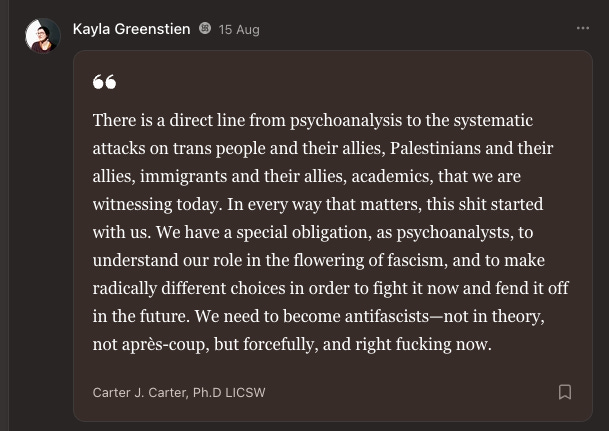
In 1973, homosexuality was removed from the DSM. In 1974, NYT reports on 8 psychoanalysts fighting to have it reinstated as a mental disorder. In 1975, Stan Grof, publishes his first book, listing homosexuality as a psychopathology.
Grof continued for years to include this in his books, making several other public statements including in 2007 saying “gay liberation” as a sign of “global crisis”. Now, 2025, Rick Doblin and MAPS want you to believe it was all just a big misunderstanding and Stan was just a product of his time. It’s important to understand the context of this, and who Stan really was in relation to the times. nytimes.com/1974/05/26/…
15.08.2025

14.08.2025

14.08.2025 -
Stan Grof reading the children’s book he illustrated, Lillibit’s Dream.
14.08.2025 -
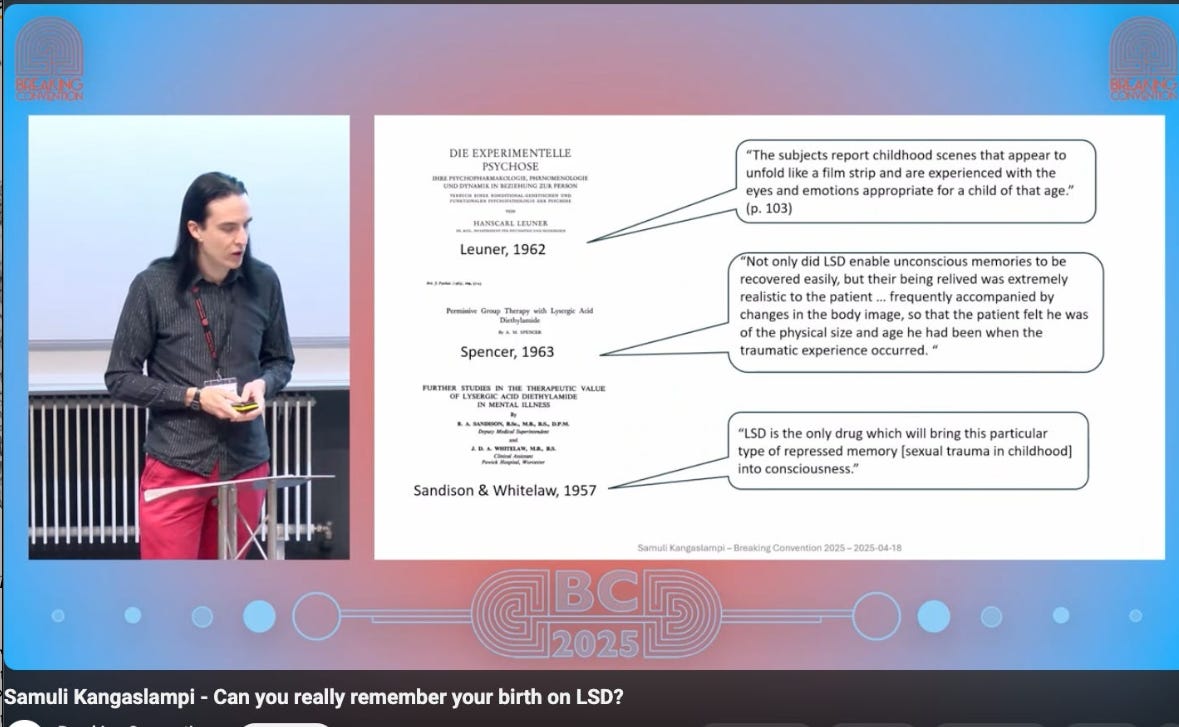
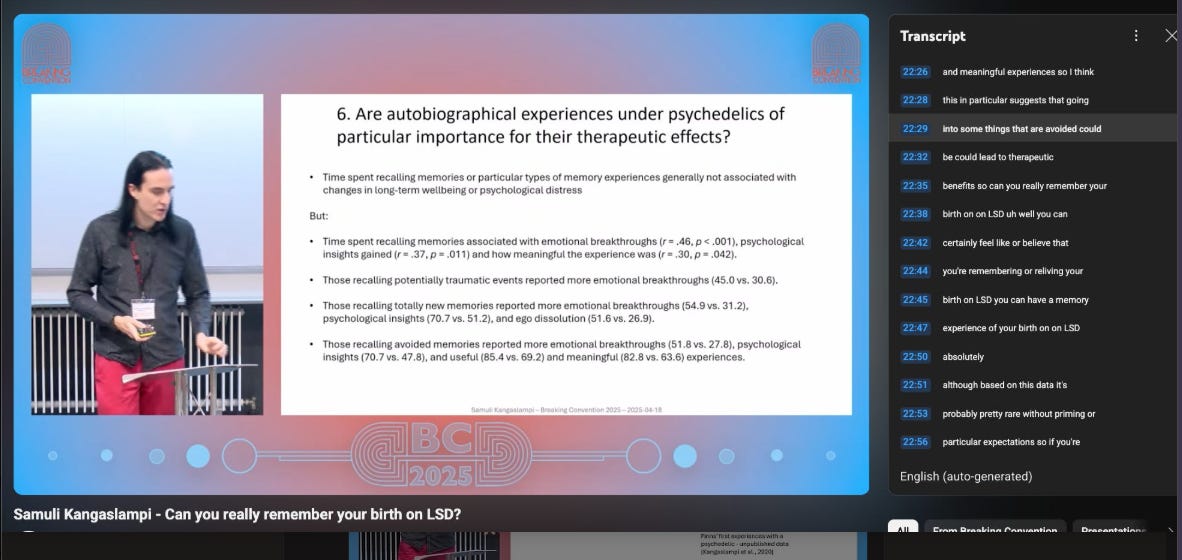
Great talk from Samuli Kangaslampi on recovering ‘repressed’ memories of birth trauma (or otherwise, note there is mention of memory and sexual abuse in the talk) on LSD at Breaking Convention. I have a lot more I want to say about this talk, but I’m in deep marking mode — maybe I’ll save it for another Sunday night quick breather. Just briefly, a spoiler alert, concluding quote from the talk:
“So can you really remember your birth on on LSD? Well you can certainly feel like or believe that you’re remembering or reliving your birth on LSD you can have a memory experience of your birth on on LSD absolutely although based on this data it’s probably pretty rare without priming or particular expectations so if you’re having analyst session with Stan Grof or a Rankian birth trauma expert I would not be surprised if you have this sort of experience um but apart from that I wouldn’t worry about it too much”
What if your entire therapy model is based on Grofian theory though e.g. the MAPS therapeutic manual?
14.08.2025 -
Appreciated this post. I’d add that for psychologists and psychiatrists, there’s an additional need for clarity about what they can ethically import into a practice that is fairly strictly held to the psychological frame. This is a central issue of the MAPS approach deriving from Holotropic Breathwork/Grofian/New Age theories — it is epistemological chaos.

12.08.2025 -
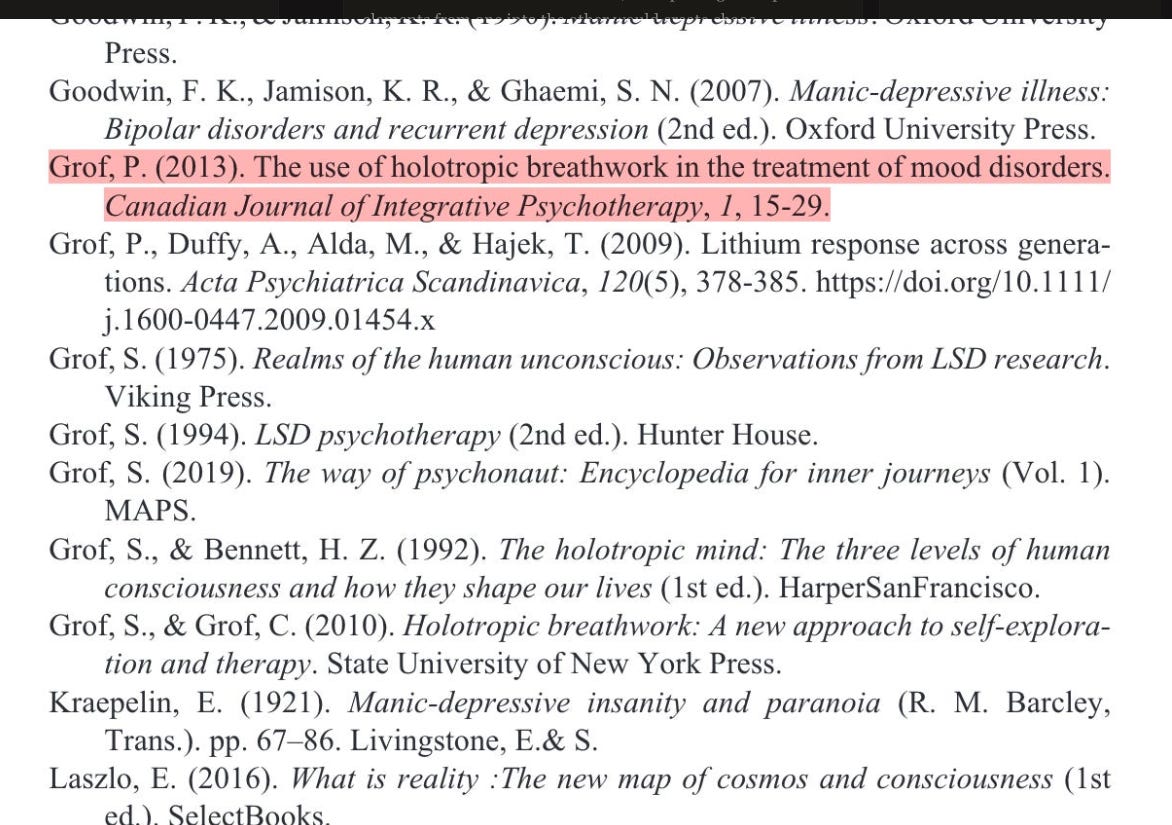
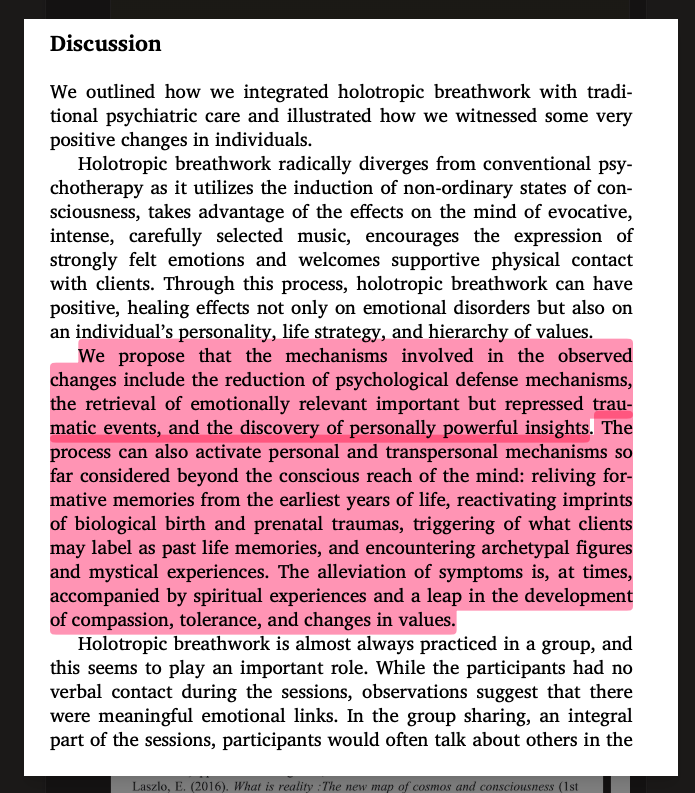
In his paper “Oscillatory Components of Psychedelic Experience”, Paul Grof (Stan Grof’s brother, also a psychiatrist) cites himself as conducting a study of Holotropic Breathwork for the treatment of mood disorders. However, I cannot find the article, or even the journal, anywhere — is anyone able to locate it or have info? The reference is (see first image also):
Grof, P. (2013). The use of holotropic breathwork in the treatment of mood disorders. Canadian Journal of Integrative Psychotherapy, 1, 15-29.
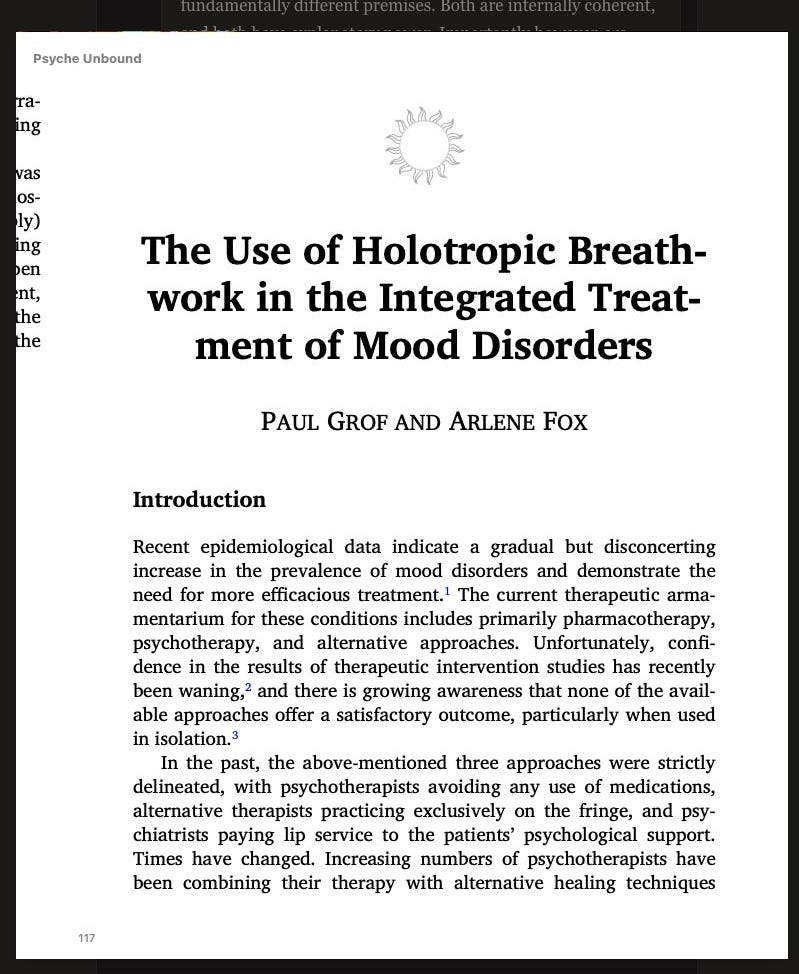
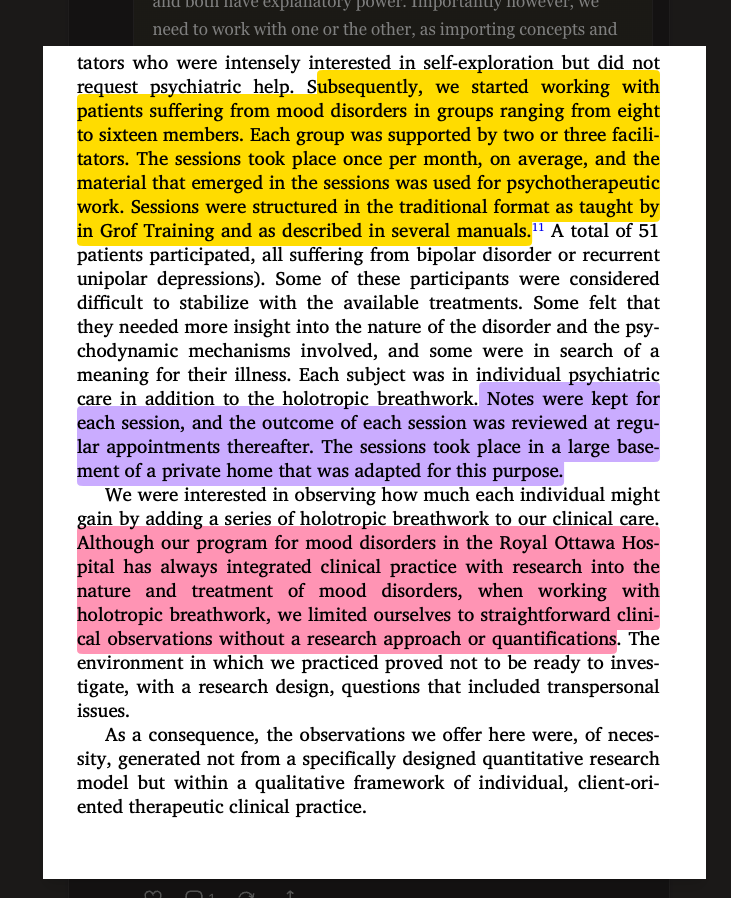
In Psyche Unbounded: Essays in Honour of Stan Grof (2022) there is a chapter on mood disorders and Holotropic Breathwork by Paul and his assistant Arlene Fox. This seems to be the same project, though it was never ‘official’ research with ethics approval. Using his brother’s pseudoscientific practice as a therapy for dozens of patients at the Royal Ottawa Hospital is notable, on top of the missing reference.
12.08.2025 -
Paragraph 8 of David Ulancey’s 2009 complaint against Robert McDermott (both CIIS professors):
“Part of the worldview promulgated by defendant McDermott within CIIS is that the use of psychoactive substances such as LSD and ecstasy can assist in freeing people (including PCC [philosophy, cosmology and consciousness] students) from the false and misleading constraints of apparently objective reality, including science and rationality. In promulgating this world view, defendant McDermott and certain of his PCC colleagues (not including plaintiff) have encouraged, and continue to both encourageand provide logistical support in the form of scheduling and site identification, for the unsupervised group use of LSD, ecstasy, psilocybin and other controlled and/orillegal substances by PCC students at annual PCCretreats at Esalen Institute at Big Sur. Another feature of the PCC retreats at Esalen is a standing invitation by the PCC faculty (not including the plaintiff) to the students (including the female students) to join in group nude hot tub sessions.”
https://archive.org/details/02402648
12.08.2025.b
Just started reading CIIS Professor Emeritus of Philosophy and Religion, David Ulansey’s 2009 complaint — paragraph 5 really stands out:
“The published mission statement of the Philosophy, Cosmology, and Consciousness (PCC) program declares a purpose, the offering to students (who are all graduate students; i.e., students who have already received: undergraduate college degrees) of “new ways of thinking and being that are both visionary and pragmatic and that resist the paradigm of fragmentation and reductionism that continues to reign within the dominant culture.” In fact, the PCC program at CIIS is dominated by faculty, including defendant McDermott, who share a philosophical/religious New Age belief that the world must be “reenchanted.” This view, within the meaning ascribed to it by defendant McDermott and other members (excluding plaintiff) of CIIS’s PCC faculty, is associated with “Anthroposophy,” a religious movement that posits the existence of secret, spiritual realms (populated by spiritual “entities”) that adepts can come to experience. “Reenchantment,” as understood by defendant McDermott, includes the notion that magic (in the sense of the manipulation of occult forces to cause effects in the physical world) must be brought back into the world, and that such notions as empirical science, logic and what others may view as objective reality (i.e., “the paradigm of fragmentation and reductionism that continues to reign in the dominant culture”) are enemies of the “reenchantment” which bring people into harmony with each other and the various spiritual worlds”.
https://archive.org/details/02402648
11.08.2025 -
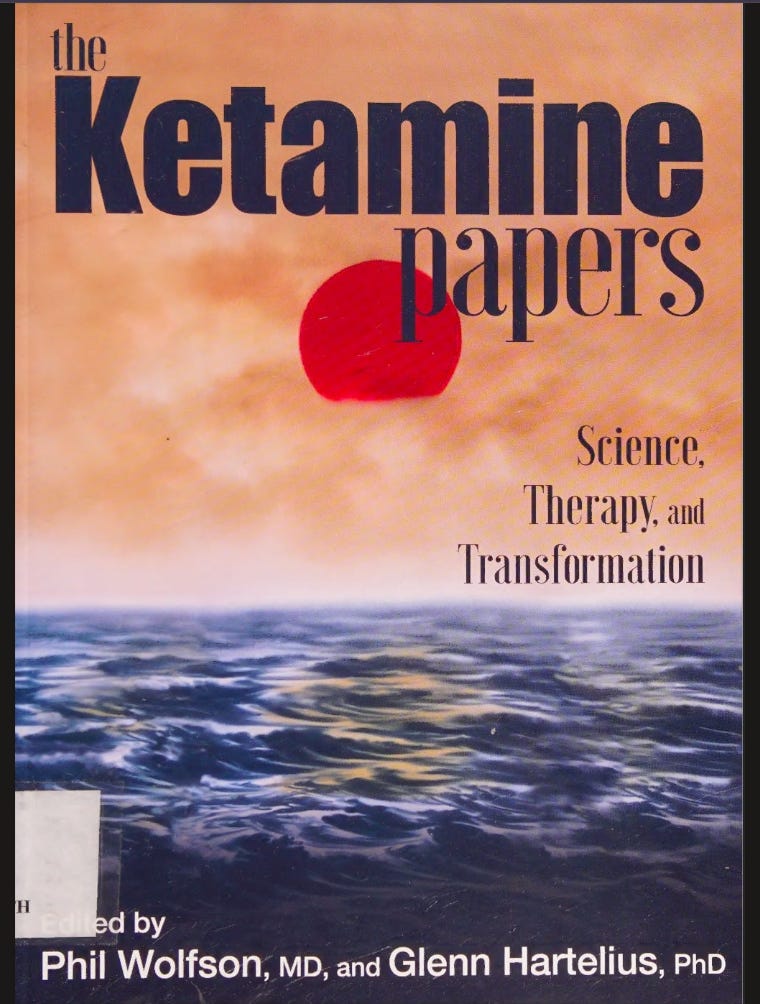
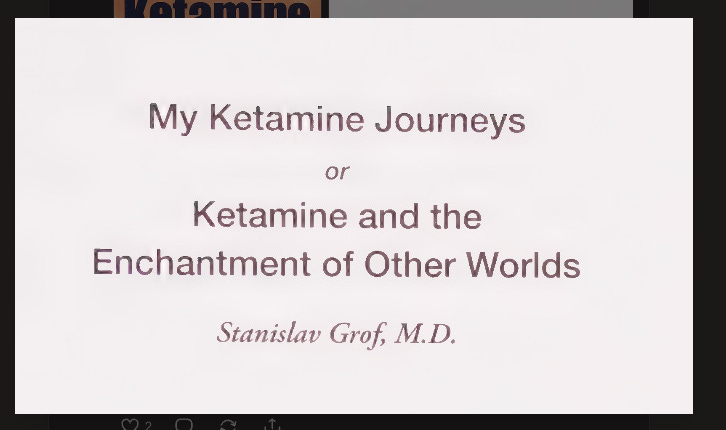
On ketamine, Grof, Wolfson, and the “controversial Mexican psychiatrist” Salvador Roquet, a 2021 New Yorker article offers some useful background to contemporary ketamine therapy. I was glad to see Grof’s chapter in Wolfson’s book mentioned (and his amazing account of being high on ketamine and inhabiting the consciousness of a wet towel at Esalen), but the piece glosses over the fact that Grof took such experiences literally, and that Wolfson continues to promote this view as valid and ‘scientific’. The author goes on to rightly characterise Wolfson’s practice as “hippie stuff” but doesn’t address the tension between this and his role as a medical doctor.
The author also implies that modern “hippy” ketamine therapy has entirely moved past Roquet and Grof, retaining only a gimmicky veneer. By failing to ask Wolfson directly about his views on Grof and the work he promotes, the author misses what I see as a key thread between the unboundaried practices of the 1970s and current ketamine therapy: clinicians who think the Cartesian–Newtonian framework is empirically wrong.
Here’s the full article, with a quoted section on Roquet and Grof below:
“In the fall of 1972, a psychiatrist named Salvador Roquet travelled from his home in Mexico City to the Maryland Psychiatric Research Center, an institution largely funded by the United States government, to give a presentation on an ongoing experiment. For several years, Roquet had been running a series of group-therapy sessions: over the course of eight or nine hours, his staff would administer psilocybin mushrooms, morning-glory seeds, peyote cacti, and the herb datura to small groups of patients. He would then orchestrate what he called a “sensory overload show,” with lights, sounds, and images from violent or erotic movies. The idea was to push the patients through an extreme experience to a psycho-spiritual rebirth. One of the participants, an American psychology professor, described the session as a “descent into hell.” But Roquet wanted to give his patients smooth landings, and so, eventually, he added a common hospital anesthetic called ketamine hydrochloride. He found that, given as the other drugs were wearing off, it alleviated the anxiety brought on by these punishing ordeals.
Clinicians at the Maryland Psychiatric Research Center had been studying LSD and other psychedelics since the early nineteen-fifties, beginning at a related institution, the Spring Grove Hospital Center…The F.D.A. approved ketamine as an anesthetic in 1970, and Parke-Davis began marketing it under the brand name Ketalar. It was widely used by the U.S. military during the Vietnam War, and remains a standard anesthetic in emergency rooms around the world.
Roquet found other uses for it. After his lecture in Maryland, he offered experiential training to the clinicians there. “I was introduced to the strangest psychoactive substance I have ever experienced in the 50 years of my consciousness research,” the psychiatrist Stanislav Grof recalls in “amazon.com/Ketamine-Pap… a book edited by the psychiatrist Phil Wolfson and the researcher Glenn Hartelius. Grof subsequently experimented with ketamine personally, and found himself inhabiting the perspectives of a wet towel hanging on a railing overlooking the ocean, petroleum filling the cavities of the earth, and the prisms of a diamond. “In one of my ketamine sessions, I became a tadpole undergoing a metamorphosis into a frog, and in another one, a giant silverback gorilla claiming his territory,” Grof writes.
When the training took place, psychedelic research was already coming under legal threat. In 1968, the U.S. government outlawed possession of LSD; Richard Nixon announced a war on drugs three years later. In 1974, Roquet was jailed for several months in Mexico, and subsequently cut back on his group sessions. (He died in 1995.) The Maryland Psychiatric Research Center ended its psychedelic research in the mid-seventies, amid broader upheaval at the center.
But ketamine remained medically legal, and countercultural psychiatrists continued to experiment with it. In the eighties, the drug’s best-known enthusiast was John C. Lilly, a doctor and psychoanalyst perhaps most famous for using sensory-deprivation tanks and dabbling in human-dolphin communication. Lilly became addicted to ketamine: a researcher who crossed paths with him at the Esalen Institute, a retreat in Northern California, recalled Lilly spending most of his time in his Volkswagen minibus, where he was evidently injecting himself multiple times a day. (Lilly said that he stopped using the drug in his early sixties, on the orders of extraterrestrials, but he resumed taking it later in life. He died in 2001, at eighty-six.) During these years, ketamine also became a popular dance-floor drug. Partyers generally snorted it, at lower doses, for a less drastic and more interactive high, experiencing distortions of perception that have been described as “scenery slicing” and “environmental cubism.” Among clubgoers, taking so much that you became unaware of your surroundings—experiencing a “K-hole”—was typically considered a scary mistake. The drug became especially fashionable among ravers in the nineties, and, at the end of that decade, the U.S. government made ketamine a Schedule III substance, putting it on the same regulatory footing as steroids and Tylenol with codeine…”
10.08.2025 -
A quick breather on Phil Wolfson and Hunt Priest, recorded on a rainy August winter Sunday evening in Australia